Comparison of work (Merce Cunningham)

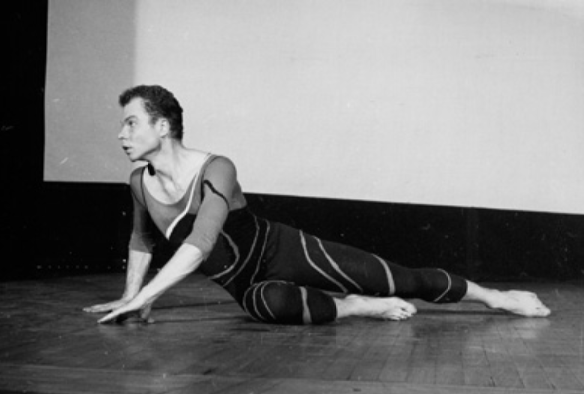
One on Cunningham’s first created pieces was called “Totem Ancestor” where it was originally created as an addition to a joint concert including him and two fellow members of the Graham Company. This brief solo by Cunningham was performed on a diagonal line, as he traveled the stage leaping from kneeling and crouched positions. John Cage wrote the music for the dance after it was complete. This dance also included a black leotard with gray stripes on. Underneath is a photo of Merce Cunningham Performing this piece. Picture from https://dancecapsules.mercecunningham.org/overview.cfm?capid=46110

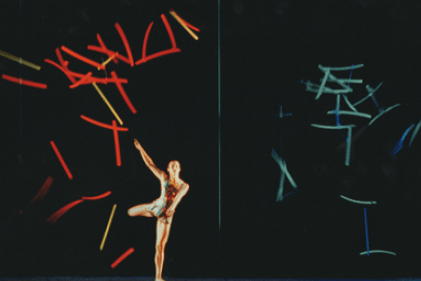
Capture.PNGLater on in his career, in 1999, he created a piece of work called BIPED where instead of looking at tradition dance, or even separating the music and dance, it was an exploration of the possibilities of animation technology of motion capture. This is where they choreographed 70 phrases to be transformed into digital images, where the images and patterns where projected in the front of the stage while live performers where behind. Cunningham also used computer software to develop choreography.

Over the years, his development has been more experimental with his dance. At first his dances included, traversing across the stage. Then by having his dance and music being created separately and mixed for the creation of chance dance, to the use of computers to create choreography and patterns to us within a live performance.

Capture.PNG

Links used:

https://dancecapsules.mercecunningham.org/overview.cfm?capid=46110

https://dancecapsules.mercecunningham.org/overview.cfm?capid=46049

Comparison of work (Martha Graham)

Martha Graham in 1926 debut as an independent artist. Her earlier work, such as Three Gopi Maidens, were ballets, where the critics found that she was graceful and quite lyrical. However a year later, all of that changed.

The Three Gopi Maidens were “performed to music by Cyril Scott, with costumes by Norman Edwards.” The work was performed by Thelma Biracree, Evelyn Sabin, and Betty Macdonald as part of Graham’s first independent concert. A review from Dance Magazine (July 1926) noted, “I liked…the three gopis in their lovely draped batik costumes of melting colors and their young faces brightened by the warm flowers in their shining hair.”

The dance depicts a graceful young woman adoring a Hindu God. We do not have any video proof of this dance however it was more balletic than what she did later on.

However in 1935, Martha Graham created this dance called Frontier. Instead of the dance being about worshiping/ adoring a God, this was a tribute to the vision and independence of the pioneer woman. As written on the Martha Graham Website the dance “portrays her strength and tenderness, her determination and jubilation at overcoming the hazards of a new land, as well as her love of the land.”

From Video evidence of this dance, you can clearly see some her technique coming though. For example in 1:45 – 1:50, you can see that she is doing contractions while going backwards in a balletic like way with the legs.

Her style has developed over the years of teaching and using her own technique, experimenting with simple body movements such as contractions and breathing that you would see in a later developed dance of hers rather than her beginning dances.


Video:

Frontier : https://www.youtube.com/watch?v=E6RZsTme_vw


Information gained:

https://www.britannica.com/biography/Martha-Graham

http://www.marthagraham.org/portfolio-items/frontier-1935/

Outline

Isadora Duncan:

As a child, she studied ballet. When she travelled to Germany, she was introduced to Frederick Nietzsche’s philosophy, where she began to formulate her own philosophy of dance. She accused the ballet of deforming the woman’s body. During this period, is when she began her theory of dance, identifying the solar plexus.

When she dances, from the photos we see, she is usually in free flowing clothing and in bare foot. All movements come from the solar plexus, alongside with the focus and the breath movement.

From old footage of her original dance, it looks like she preferred to dance in the outdoors rather than on stage. This could be to help her dance reflect nature, or for her to connect with nature.

Her style was not seen to be developed during her time, but as time passed with little knowledge of her exact choreography, other people have been taking what they knew and making in the style of her.

As of now, her style is not really practised or performing. However, she created this modern dance timeline, and her basic ideas are seen within most contemporary dances, such as the focus and breathe movement.

Rudolf Laban:

He studied theatre life of Bratislava, where then, rejecting the military career planed, he studied architecture while observing the moving body and its spaces. He then went onto revolutionising the movement arts at his arts school in the summer.

In 1919, Laban ran a dance theatre company and opened a main school, while performing and creating works. Later on, he created a form of dance notation. This was called Kinetography Laban, which is now formally known as Labanotation.

He is known for his choreology that he came up with, this is still used at Laban school, and other dancers around the world as a way of writing dances. However the use of Labanotation has decreased due to people now being able to record.

Martha Graham:

When she was young, her dad treated patients with physical movements to help nervous disorders. This influenced her to take dance throughout her teens. Where in 1926, she established her own dance company in New York City where she developed and taught her own technique.

The key components of her dances where based on breaths and contractions. Where she experimented with basic human movements, to increase the emotional activity of the dancers body. Her production were mainly set on a stage that had basic lighting and costume. Where the only thing that stood out were the dancers.

Within the dance company she established, she looked at how the human body moved with contractions and breath. At the beginning of the company, she was working on the simple body movements. But later on she worked on different dances, collaborating with different collaborators, such as Isanu Noguci, who worked on sculpting and director John Houseman.

Her company has been the training ground for many modern contemporary dances, such as Merce Cunningham and Paul Taylor.

Merce Cunningham:

He began dancing at a young age at the Cornish School. This is where He saw the work of Martha Graham, who later invited him to join her company. He went on and studied at the Martha Graham Dance Company as a soloist.

It is also at the Cornish school, where he first met John Cage, who would later become a big influence in his work. Later on, his work included separating music and dance and creating them individually, then putting them together with chance.

His dances included technique that emphasizes form, coordination of the torso and legwork, rhythmic accuracy and spatial awareness. A Cunningham technique class is usually 90 minutes where there is a 45 minute warm up.

His costumes and sets looked at different colours on them. His costume choices were often quite unique, such as unitards, with different patterns on representing what dance he was doing a dance about. His lighting, sets and costumes all match up.

Akram Khan:

His early training was in Kathak, Indian classical dance and contemporary dance. When he was in his teens, he wanted to learn and create with different collaborators.

His rules that he set himself were to take risks, to think big and daring, explore the unfamiliar, don’t compromise and to tell stories through dance

His dances usually contain a mix between Kathak and contemporary. Telling a story about the past, either from his own experiences, his families or his collaborators. Where the costume is quite plain and simple, fitting with the story theme, and the set being realistic with the lighting representing different parts of the story.

His style develops with ever collaborator he has worked with, as he works with different dance styled dancers, for example ballet.


Information Gained from:

http://www.dancevisionsny.org/about/duncan-dance/technique/

https://www.pitt.edu/~gillis/dance/isadora.html

https://www.trinitylaban.ac.uk/about-us/our-history/rudolflaban

http://www.marthagraham.org/history/

https://www.edaclyon.com/merce-cunningham-technique/

Comparison Between Practitioners

Isadora Duncan was the main person to start this revolutionary movement away from the ballet scene to create this new dance, which is now  known as contemporary. She laid down the basics for other practitioners to build upon. 

Isadora Duncan’s ideal for the future dancer is that it should be a woman as it was mostly men that were the main dancers. In today’s society, dance is seen as being an activity for all genders. But the person to develop contemporary dance would not be a woman, but was Rudolf Laban, who would go on to create dance notation. With these two practitioners they both created something that would be used in the future by others, but Isadora Duncan created this freedom of dance while Rudolf Laban allowed dance to be preserved in writing.

Like Isadora Duncan, Martha Graham developed contemporary dance. However Martha Graham created a new technique with the human movement to release more emotion into her dance, with the use of contractions and breaths but Isadora created this movement without making any new techniques because she went against the ballet norms.

Just like the ideas Rudolf Laban about dance and music, Merce Cunningham created his dance separately from music that had been composed. Merce wanted dance to not tell a story but just be simply dance. Nonetheless, Akram Khan’s pieces usually tell a story.

Over the years, there have been multiple changes to get to the contemporary style that we have today. And as the years go by, our definition of contemporary dance could be changed by the current developers or even the future developers.

Timeline

  • Isadora Duncan (1877 – 1927)
    • Started the evolution of contemporary dance
    • American – style broke free of ballet conventions
    • Icon of this movement
    • Freedom from convention
  • Rudolf Laban (1879 – 1958)
    • Experimented with
      • Movement choirs
      • Theories of movement
    • Invented a form of modern dance notation
    • Founder of “Ausdruckstanz”
      • Dance of feeling and expression
    • Devoted himself to the relationship of dance and music, that until dance is relieved from being music visualization it can not lift itself from being bottom of the pile in terms of hierarchy and significance of the arts.
  • Mary Wigman (Former student of Laban) (1886 – 1973)
    • Witch Dance (1914)
      • Dances without music
      • Pure Dance
      • never done before
    • Witch dance (1929)
      • Creates movement her self
      • musical accompaniment of gongs and drums is set to it
      • Movements have a powerful force
      • The musician is following her not her following the music. Changes the relationship that has come thought out the creating of modern dance. Following Laban’s ideas.
  • Kurt Jooss (Prodigy Of Laban) (1901 – 1979)
    • danced in Laban methods and used ballet techniques
    • Created political theater
      • Green Table (1932)
        • Anti war piece won the first international award for choreography.
        • Tells a story about if it continues it’ll just end back in war.
        • Year after Hitler became Chancellor of German
  • Martha Graham (1894 – 1991)
    • Pioneering her own language in America
    • Big impact in american modern dance
    • Graham Technique
      • Became her lasting language
      • Based on breath and contractions
  • Merce Cunningham (1919 – 2009)
    • Wanted to dance for dance sake
      • Removed story, meaning
    • His was strongly influenced by composer John Cage
    • Uses Chance in the creation of choreography
    • makes music and dance separately.
    • dance became pure movement
      • Links with Dance being relieved from being music visualization (Laban)
  • Karole Armitage (1954 – Present)
    • Classically trained Ballerina who danced with Merce Cunningham
    • New York, 1970, she rebelled against her mentors and peers.
      • combined ballet with the energy of punk
    • First Punk Ballerina
  •  Michael Clark (1962 – Present)
    • been Inspired by Karole Armitage
    • Royal Ballet school prodigy
    • 1984 – Michael Clark Company launched
    • he was a free spirit taking ideology from Isadora Duncan from breaking from the conventions of ballet
  • Anne teresa de Keersmaeker (1960 – Present)
    • Inspired by Trisha Brown
      • accumulation piece (repeating movements)
    • Keersmaeker uses the repeating movement but gave it attitude.
  •  Pina Bausch (1940 – 2009)
    • She brought dance close too theater
    • Works usually Three hours long
    • Including dialogue and props/acting
    • Prodigy of Kurt Jooss
    • She was the Old Lady at 26 in Jooss work – The Green Table
  • Akram Khan (1974 – Present)
    • Trained in contemporary dance, while dancing Kathak.
    • In dance piece’s he included both of these too tell a story.
  • Wayne McGregor (1970 – Present)
    • The dance’s didn’t have too flow from section too section.

Bibliography reference – [1]


Isadora Duncan

c65c315eeaafaa1937e838d93cae7e17.jpg“It became about the driving spirit of contemporary dance… to reinvent itself as a language for the expression of new ideas. ”  [1]
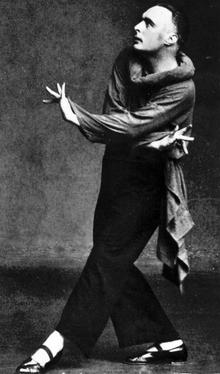
Isadora Duncan was a early form of a feminist. At the time, dance was usually about the males being the main roles and the women just being a damsel in distress that is looking for a hero to come and save her from the villain. Isadora Duncan’s view for the future dancer is as followed –  “She is coming, the dancer of the future. The free spirit will inhabit the body of all women she will dance not in the form of a nymph nor fairy nor coquette, but in the form of women in its greatest and purest expression. from all parts of her body shall shine radiant intelligence, bringing to the world the thoughts and aspirations of thousands of women. This is the mission of the dancer of the future” [1]

She broke free of the typical conventions of ballet to show “a natural expressive style of the body.” But also she didn’t just throw away the typical conventions of movement, it was also about the costumes. With her dances, she is always in a free flowing dresses that did not restrict herself, dancing with nothing on her feet, where usually you would be wearing some type of ballet shoes. This would have been seen as a political notion as “she’s a woman saying I can move freely through space. I don’t have too restrict myself and appear in a very polite manner.”[1] 

In 1905, she toured in Russia. While she was touring, Serge Diaghilev saw her performance. Later on he would found the Ballet Russe. Where Diaghilev and Vaslav Nijinsky would create “The Rite of Spring” which was a violent ballet styled piece that used turned in toes and showed violent shakes that would not of been seen in a typical ballet, but also the story line isn’t a typical fairy-tale.

She was the first person to create an impact too the contemporary dance, as she broke away from the typical dance style that would have been key in her years of dance. Her Ideas went on too inspire every dancer who dances in the contemporary style, mainly of the likes of Rudolf Laban who would go and develop the contemporary dance further.


Information gained from Bibliography:

[1]


Rudolf Laban

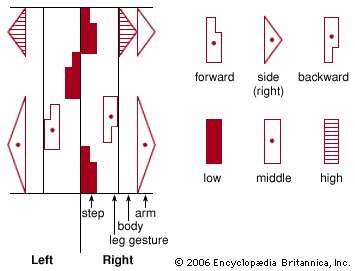
Rudolf_von_Laban.jpgRudolf Laban, was a teacher, who experimented “with movement choirs, theories of movement” [1] that would create a form of modern dance notation that allowed choreographers too keep a note down on what their movement phrases are. But he also founded a dance called the “Ausdruckstanz”. This is the dance of feeling or expression.
The one thing he kept devoted on was that if dance “can not lift itself out of being bottom of the pile in terms of hierarchy and significance of the arts.” This would go and inspire two of his students, Mary Wigman and Kurt Jooss.

Mary Wigman created two dances called “Witch Dance”, one in 1914 and another in 1929. Both of them uses this idea of separating dance and music. In the 1914 dance, she danced with no music, which had not been done before then. But in the 1929 one, she had a musical accompaniment of drums that was following her movements rather than her following the music, which changed the relationship for some forms of the modern dance.

Kurt Jooss followed with Laban’s methods however as he also trained in ballet, he used some techniques of that too create political theater. His famous productions would have been the “Green Table” which he created in 1932. It was an Anti-war piece that won “the first international award for choreography” [1]  that told a story that if we keep going we will end up back in war.

Rudolf Laban was inspired and influenced by “the social and cultural changes of time” [6] that Isadora allowed the dance world to have. To have “men and women dancing barefoot and in little clothing” [6] in contrast too ballet. Laban developed contemporary dance by coming up with a way to write down movement material, and also coming up with the idea that dance can become more significant if if breaks itself from music.labanotation-symbols


Information gained from Bibliography:

[1]

[6]

Merce Cunningham

merceap_custom-e036d818e51c35a8be2f43cac5f9ced7f3d87819-s800-c85.jpgMerce Cunningham wanted dance not to be about telling a story or to have any meaning, he wanted to dance for dance sake. In order too do this he took the story out and the meaning, but also separated the dance and music.

With this, he was heavily influenced by composer John Cage where he uses chance too create different sections of music. Cunningham took this idea and came up with chance dance, where he’d create different sections of dance and before the performers went on stage the order of the dance and music would be different.

Though it’s not stated anywhere, with the dance not being made by music but separately, links back to the idea that Laban wanted dance too be about. About dance being relieved from being music visualization.

Merce Cunningham was invited too join Martha Graham‘s Dance company in 1939. He was there for many years and gained lead roles but also he choreographed some solo work outside the company in 1944. From then onward, he started to develop his own technique.

Some of his work includes Nearly Ninety (2009), Loose Time (2002), Way Station (2001) and Interscape (2000). Nearly Ninety consisted “mostly of solos, duets and trios” [7]. This was focusing on “human interaction and independence” [7] Compare with early work to work now.

Merce Cunningham had a small impact on the contemporary development as he took the idea from Rudolf Laban about the dance can be more significant if separate from music. But he came up with a way to separate dance and music while randomizing when the movement are. This goes and helps out with choreographing some pieces, mainly in schools, with dance and also allows the children to become confident with choreography.


Information gained from Bibliography:

[1]


Martha Graham

Martha-Graham-in-Lamentation-No.-2.jpgMartha Graham had a great impact in american modern dance by creating a new technique. This technique was based on breath and contractions. This technique has been used in most dance classes and at most universities. It became her lasting language.

In 1926 she created her dance company. On her companies website, they say this about her developing her own technique “In developing her technique, Martha Graham experimented endlessly with basic human movement, beginning with the most elemental movements of contraction and release. Using these principles as the foundation for her technique, she built a vocabulary of movement that would “increase the emotional activity of the dancer’s body.” [1]

This increase of “emotional activity” [1] in the body allowed her to dance and choreograph with sharp, angular movements.

Martha Graham went on and inspired Merce Cunningham with some movement material but also with Graham’s technique. She also shaped the contemporary dance by using contractions and breath.


Information gained from Bibliography:

[1]